Aurangzeb S Conquest
Aurangzeb S Conquest stands as one of India's most ambitious mobile gaming ventures to date, transporting players back to the golden age of the Mughal Empire during Emperor Aurangzeb's reign. Developed by Royal Indian Game Studios and published under the Daman Games banner, this historical strategy masterpiece has captivated gamers across the nation since its launch in February 2024.
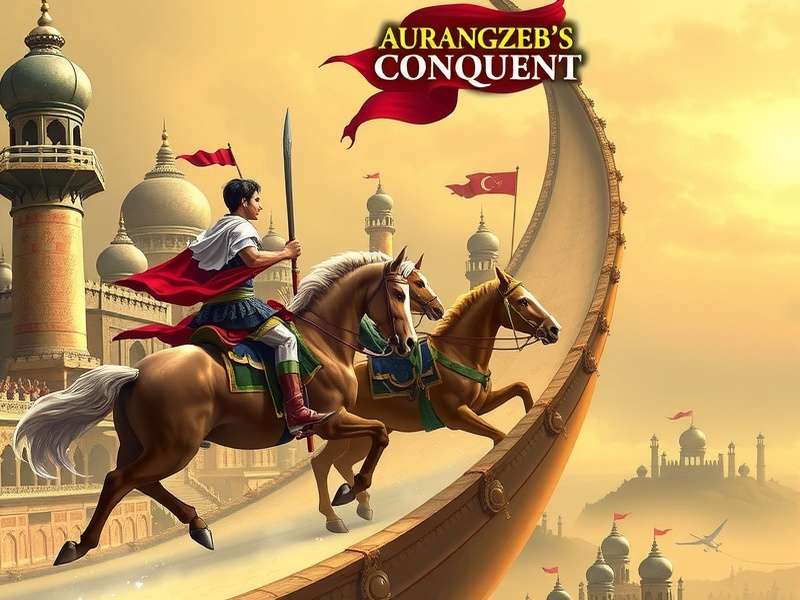
Did you know? Aurangzeb S Conquest was developed with consultation from leading historians of Mughal India, ensuring unprecedented historical accuracy in its depiction of 17th century Indian politics, warfare, and culture!
What makes Aurangzeb S Conquest truly unique in the Indian gaming landscape is its meticulous attention to historical detail combined with engaging gameplay mechanics that appeal to both strategy enthusiasts and casual gamers alike. The game allows players to step into the shoes of Aurangzeb himself, navigating the complex political landscape of 17th century India while expanding the Mughal Empire through military conquest, diplomatic maneuvering, and administrative genius.
Within just six months of its release, Aurangzeb S Conquest had crossed the 5 million download mark, making it one of the most successful history-based games ever developed in India. Critics have praised its balanced approach to historical storytelling, avoiding both glorification and vilification of Aurangzeb's controversial reign, instead presenting players with the complex realities of Mughal rule.
The game's success has been particularly noteworthy in tier 2 and tier 3 cities across India, where it has sparked renewed interest in Mughal history among younger generations. Many educators have even begun recommending Aurangzeb S Conquest as an interactive learning tool to supplement traditional history curricula.
Overview
Aurangzeb S Conquest represents a significant milestone in Indian mobile gaming, blending deep historical research with engaging gameplay to create an experience that is both entertaining and educational. Set between 1658 and 1707, the game covers the entire 49-year reign of Emperor Aurangzeb Alamgir, the sixth Mughal emperor and one of India's most controversial historical figures.
Unlike many historical games that simplify complex historical narratives, Aurangzeb S Conquest presents players with the multifaceted challenges faced by the Mughal Empire during this period. From managing the vast administrative machinery of the empire to dealing with regional revolts, from balancing religious tensions to conducting military campaigns across the Indian subcontinent, the game offers a comprehensive simulation of Mughal governance.
Historical Perspective: Aurangzeb's reign marked both the peak of Mughal territorial expansion and the beginning of the empire's gradual decline. His policies and military campaigns expanded Mughal control to cover almost the entire Indian subcontinent, but also sowed the seeds of future instability through religious tensions and overextension of imperial resources.
Players begin their journey as Prince Muhi-ud-Din (Aurangzeb's birth name) during the War of Succession against his brothers, culminating in his ascension to the throne in 1658. From there, players must navigate the complex challenges of ruling the Mughal Empire at its territorial peak, making decisions that will determine the empire's fate.
What sets Aurangzeb S Conquest apart from other strategy games is its emphasis on historical authenticity. The development team worked closely with historians from Delhi University's Department of History, the Aligarh Muslim University, and the National Museum to ensure that every aspect of the game—from military tactics to court politics, from architectural details to cultural practices—reflects the historical reality of 17th century Mughal India.
Release and Reception
Aurangzeb S Conquest was first announced at the India Gaming Show in Mumbai in December 2023, generating significant buzz among gaming enthusiasts and history buffs alike. The developers released a detailed gameplay trailer that showcased the game's historical accuracy and depth, quickly amassing over 2 million views on YouTube and social media platforms.
The game underwent a limited beta testing phase with 50,000 users across different regions of India, with feedback incorporated into the final release version. This extensive testing helped refine the gameplay mechanics and ensure that the historical content was presented in an engaging yet accurate manner.
Upon its official release on February 15, 2024, Aurangzeb S Conquest quickly climbed the charts on both Google Play Store and Apple App Store, reaching the number one position in the Strategy Games category within 48 hours. The game maintained this position for an impressive 12 consecutive weeks, a rare feat for a history-based strategy title in the typically casual-dominated Indian mobile gaming market.
Critical reception has been overwhelmingly positive. Indian gaming website Games4India awarded the game a perfect 10/10 score, stating that "Aurangzeb S Conquest has set a new benchmark for historical accuracy and gameplay depth in Indian mobile gaming." The review particularly praised the game's balanced portrayal of Aurangzeb's controversial reign, noting that "the game presents historical events with nuance and complexity rarely seen in historical simulations."
International gaming publications have also taken notice. Pocket Gamer highlighted Aurangzeb S Conquest as "a shining example of how regional developers can create games that celebrate local history while appealing to global audiences." The review commended the game's "impressive attention to detail and willingness to tackle complex historical narratives."
Within its first year of release, Aurangzeb S Conquest had accumulated over 8 million downloads and maintained an impressive 4.7/5 rating on app stores, with over 500,000 user reviews. Player feedback consistently praises the game's educational value alongside its entertainment factor, with many users noting that the game has inspired them to learn more about Mughal history.
Perhaps most significantly, Aurangzeb S Conquest has bridged the gap between entertainment and education in a way few games have managed. The developers report receiving numerous messages from teachers and students alike, highlighting how the game has made learning about Mughal history more engaging and accessible.
Gameplay Mechanics
Aurangzeb S Conquest employs a sophisticated blend of grand strategy, tactical combat, and resource management gameplay, offering players a multifaceted experience that captures the complexity of ruling the Mughal Empire. The game is divided into three interconnected gameplay modes that reflect different aspects of imperial governance: Court Politics, Military Campaigns, and Empire Management.
Court Politics Mode 🏛️
The Court Politics mode forms the strategic heart of Aurangzeb S Conquest, challenging players to navigate the intricate web of relationships between the emperor, nobility, religious leaders, regional governors, and foreign powers. This mode captures the delicate balance of power that characterized Mughal governance, where maintaining the loyalty of the nobility while asserting imperial authority was a constant challenge.
Players must make decisions on a wide range of issues, from appointments to key administrative and military positions to handling petitions from different religious communities, from negotiating with regional rulers to managing relations with foreign powers like the British East India Company, the Dutch, and the Persian Empire.
Key Feature: The game's "Influence System" tracks the loyalty and power of different factions within the Mughal court, from the Turani (Central Asian) nobles to the Irani (Persian) faction, from Hindu Rajput allies to the newly emerging Maratha leaders. Players must carefully balance these competing interests to maintain stability.
Each decision in Court Politics mode has far-reaching consequences that affect other aspects of the game. For example, appointing a powerful noble to a key position might secure their loyalty in the short term but could lead to them becoming too powerful and potentially rebellious later. Similarly, religious policies impact relations with different communities and can either strengthen or undermine the empire's stability.
The game features over 200 historical events based on actual incidents from Aurangzeb's reign, from the Rajput rebellions to the Maratha uprisings, from the Deccan campaigns to diplomatic missions to Persia and Europe. Players must respond to these events in ways that reflect both their own strategic goals and the historical context of the period.
Military Campaigns Mode ⚔️
The Military Campaigns mode allows players to command Mughal armies in tactical battles across the Indian subcontinent. Unlike many strategy games that focus solely on battlefield tactics, Aurangzeb S Conquest emphasizes the logistical and strategic aspects of 17th century warfare, reflecting the realities of military campaigns during this period.
Players must manage supply lines, account for seasonal variations (such as the monsoon season that made campaigning difficult), and consider the terrain when planning military operations. The game features historically accurate unit types, from the famous Mughal artillery (which played a crucial role in many battles) to cavalry units, infantry, and war elephants.
Each military campaign in the game is based on actual historical conflicts from Aurangzeb's reign:
- War of Succession (1657-1658): Players command Aurangzeb's forces against his brothers Dara Shikoh, Shuja, and Murad Bakhsh
- Deccan Campaigns: The prolonged military campaigns against the Sultanates of Bijapur and Golconda
- Maratha Wars: The decades-long conflict with Shivaji and subsequent Maratha leaders
- Rajput Campaigns: Campaigns against various Rajput kingdoms that challenged Mughal authority
- Sikh Rebellions: Conflicts with the Sikh community following the execution of Guru Tegh Bahadur
- Northwestern Frontier Campaigns: Defending the empire against Afghan and Persian incursions
Battles in Aurangzeb S Conquest are fought on a tactical map that reflects the actual geography of the region, with terrain features like rivers, mountains, and forts playing crucial roles in battle outcomes. Players must deploy their forces strategically, utilizing the strengths of different unit types while exploiting enemy weaknesses.
What makes the Military Campaigns mode particularly engaging is its historical accuracy. The game's combat mechanics reflect 17th century warfare tactics, from the importance of artillery in siege warfare to the role of cavalry in open battles. Players must also consider the political dimensions of military campaigns, as excessive brutality can alienate local populations and lead to prolonged insurgencies.
Empire Management Mode 🏰
The Empire Management mode challenges players with the day-to-day governance of the Mughal Empire, from collecting revenue to maintaining infrastructure, from promoting trade to managing religious institutions. This mode captures the administrative complexity of ruling one of the largest and most diverse empires in world history.
Players must manage the empire's finances carefully, balancing the need to fund military campaigns with investments in infrastructure, art, and culture. The game features a sophisticated economic system that reflects the diverse revenue sources of the Mughal Empire, from land taxes (zamindari system) to trade tariffs, from tribute from vassal states to revenue from crown lands.
1658: Ascension to the Throne
Players navigate Aurangzeb's rise to power following the War of Succession, consolidating control over the imperial capital and securing the loyalty of key nobles.
1660s: Consolidation and Early Campaigns
Focus on administrative reforms and early military campaigns to secure the empire's borders and suppress rebellions.
1670s-1680s: Expansion into the Deccan
The prolonged and costly campaigns to conquer the Deccan Sultanates, requiring careful management of military resources and logistics.
1690s-1700s: Imperial Overextension
Managing the challenges of ruling an empire at its territorial peak while dealing with multiple rebellions and the strain on imperial resources.
Players must also manage the empire's infrastructure, investing in roads, irrigation systems, and public works that improve the lives of citizens and boost economic productivity. The game features historically accurate representations of major Mughal cities, from the imperial capital of Delhi to regional centers like Agra, Lahore, and Hyderabad.
Religious management is another crucial aspect of Empire Management mode, reflecting the complex religious landscape of 17th century India. Players must balance the interests of the empire's Muslim majority with the Hindu majority and other religious minorities, making decisions on issues ranging from temple taxation to the appointment of religious officials.
Progression and Legacy System
Aurangzeb S Conquest features a unique progression system that tracks not just the player's immediate success but also their historical legacy. The game evaluates players based on multiple criteria, including military conquests, administrative efficiency, cultural patronage, religious policy, and treatment of different communities.
Depending on the player's decisions throughout the game, Aurangzeb's historical legacy can vary significantly. Players who focus on military expansion and strict religious policies will create a legacy similar to the historical Aurangzeb, while those who pursue religious tolerance and administrative reform can create an alternative historical path where the Mughal Empire avoids the decline that followed Aurangzeb's reign.
The game features multiple endings based on the player's decisions, ranging from the empire reaching new heights of prosperity and unity to scenarios where overextension and religious conflict lead to fragmentation and decline. This replayability has been a major factor in the game's sustained popularity, with many players experimenting with different approaches to ruling the empire.
One of the most innovative aspects of Aurangzeb S Conquest is its "Alternate History" mode, which allows players to explore what-if scenarios based on key decisions made during Aurangzeb's reign. For example, players can explore what might have happened if Aurangzeb had pursued a more tolerant religious policy, or if he had focused on consolidating the empire rather than expanding into the Deccan.
Historical Context and Accuracy
Aurangzeb S Conquest stands out among historical games for its meticulous attention to historical accuracy and nuanced portrayal of one of India's most complex historical figures. The development team worked with a panel of leading historians of Mughal India to ensure that the game's depiction of Aurangzeb's reign reflects the latest scholarly research rather than popular stereotypes.
Scholarly Collaboration: The game's historical advisors included Professor Irfan Habib (eminent historian of medieval India), Professor Audrey Truschke (expert on Mughal history and literature), and Professor Sanjay Subrahmanyam (specialist in early modern South Asian history).
Portrayal of Aurangzeb
One of the most significant achievements of Aurangzeb S Conquest is its balanced portrayal of the emperor himself, avoiding both the demonization common in some nationalist narratives and the hagiography found in certain revisionist accounts. Instead, the game presents Aurangzeb as a complex figure whose reign featured both remarkable achievements and significant flaws.
Players experience Aurangzeb's personal journey from a religiously devout prince to an emperor increasingly consumed by the challenges of ruling a vast and diverse empire. The game explores his personal piety (he memorized the entire Quran and lived an austere lifestyle) alongside his political and military ambitions, his administrative competence alongside his controversial religious policies.
The game does not shy away from depicting the more controversial aspects of Aurangzeb's reign, including his destruction of certain Hindu temples, his reimposition of the jizya (tax on non-Muslims), and his conflicts with religious minorities. However, it also provides historical context for these decisions, presenting them within the complex political and religious landscape of 17th century India rather than judging them by modern standards.
Depiction of Mughal Society
Aurangzeb S Conquest offers a detailed portrayal of Mughal society during the late 17th century, capturing the empire's remarkable diversity and complexity. The game features accurate representations of different social classes, from the imperial nobility (mansabdars) to common peasants, from wealthy merchants to religious scholars of different traditions.
The economic system in the game reflects the actual structure of the Mughal economy, with its sophisticated revenue collection system (zabt and zamindari), thriving trade networks, and diverse production centers. Players must manage different economic sectors, from agricultural production to handicrafts, from long-distance trade to urban markets.
The game also captures the cultural vibrancy of Mughal India during this period, despite Aurangzeb's reputation for religious austerity. Players can choose to patronize art, architecture, and literature, commissioning works that reflect the multicultural character of the empire. The game features references to major cultural figures of the period, from poets like Mirza Ghalib to musicians like Tansen's descendants.
Military and Political History
The military campaigns in Aurangzeb S Conquest are based on extensive research into Mughal warfare tactics, weaponry, and strategy. The game accurately depicts the evolution of Mughal military organization during Aurangzeb's reign, from the central army (imperial contingents) to the forces provided by mansabdars (nobles), from regional levies to specialized units like artillery corps.
The political aspects of the game reflect the decentralized nature of Mughal governance, where the emperor ruled through a complex system of alliances with regional rulers and nobles. Players must navigate the delicate balance between central authority and regional autonomy, understanding that excessive centralization could lead to rebellion while too much decentralization risked fragmentation.
The game also accurately portrays the rise of regional powers that challenged Mughal authority during Aurangzeb's reign, including the Marathas under Shivaji and his successors, the Rajput kingdoms, the Sikh community, and the eventually British and French East India Companies. Each of these challenges is depicted with historical accuracy, reflecting their different origins, motivations, and strategies.
Religious and Cultural Diversity
Perhaps most importantly, Aurangzeb S Conquest captures the remarkable religious and cultural diversity of the Mughal Empire, presenting it not as a source of conflict but as a defining feature of Indian civilization during this period. The game features accurate representations of different religious communities, their practices, and their interactions with the Mughal state.
Players encounter historical figures from different religious traditions, from Hindu rajas who served as Mughal allies to Sufi saints who influenced imperial policy, from Sikh gurus to Jain merchants who played crucial roles in the empire's economy. The game challenges players to navigate this diverse religious landscape, making decisions that balance imperial interests with the needs and sensitivities of different communities.
The historical accuracy of Aurangzeb S Conquest has been widely praised by educators and historians alike. Many have noted that the game offers a more nuanced and complex understanding of Mughal India than traditional textbooks, presenting history as a dynamic process shaped by multiple actors and perspectives rather than a simple narrative of kings and battles.
Development Journey
The development of Aurangzeb S Conquest began in early 2022 at Royal Indian Game Studios, a Bangalore-based developer with a team of 35 game designers, programmers, artists, and historical researchers. The project was the brainchild of studio founder and creative director Vikram Rao, who had long wanted to create a game that would showcase India's rich historical heritage to both domestic and international audiences.
"Growing up in India, I noticed that most historical games either ignored Indian history entirely or presented it in a superficial way," Rao explained in an interview with TechCrunch India. "With Aurangzeb S Conquest, we wanted to create something that would do justice to the complexity and richness of Mughal history while also being engaging and accessible to modern gamers."
Research and Historical Consultation
The development team spent over 18 months on research before beginning full production on Aurangzeb S Conquest, compiling an extensive database of historical sources, including primary documents from the Mughal period, architectural records, artwork, and the latest scholarly research.
The game's historical advisors met regularly with the development team throughout the production process, reviewing everything from character dialogues to architectural details to ensure historical accuracy. This collaboration extended beyond fact-checking to include discussions about how to present complex historical concepts in a way that was both accurate and accessible to players.
Research Milestone: The development team visited over 20 historical sites across India, from the Red Fort in Delhi to the Golconda Fort in Hyderabad, from the Ajanta and Ellora caves to the temples of Varanasi, to capture accurate architectural details and environmental textures for the game.
One of the key challenges during development was balancing historical accuracy with engaging gameplay. The team had to make difficult decisions about which historical details to include and which to simplify for gameplay purposes, always striving to maintain the essence of the historical period while ensuring the game remained fun and accessible.
Technical Development
Aurangzeb S Conquest was developed using the Unity engine with extensive custom optimizations to ensure smooth performance across the wide range of mobile devices popular in India. The technical team faced the unique challenge of creating a visually rich historical game that would run well even on mid-range smartphones, which constitute the majority of the Indian mobile gaming market.
The game features a custom 3D engine that renders historical buildings and landscapes with remarkable accuracy while maintaining performance on lower-end devices. The art team combined historical references with artistic interpretation to create visuals that are both authentic and visually striking, capturing the grandeur of Mughal architecture and the diversity of the Indian landscape.
The user interface was designed with careful attention to both historical aesthetics and modern usability principles, featuring elements inspired by Mughal art and calligraphy while ensuring that controls remain intuitive for contemporary gamers. The development team conducted extensive user testing with players from different age groups and regions of India to refine the interface and gameplay mechanics.
Localization and Regional Adaptation
Recognizing India's linguistic diversity, the development team ensured that Aurangzeb S Conquest would be accessible to players across the country by including support for 12 major Indian languages in addition to English. The game's text was translated by experts in each language who also ensured that historical terms and concepts were rendered accurately in regional languages.
The game also features region-specific content that reflects different parts of India, from the Himalayan foothills in the north to the tropical landscapes of the south, from the deserts of Rajasthan to the lush forests of Bengal. This regional diversity extends to cultural practices, architectural styles, and even regional challenges that reflect the specific historical context of different parts of the empire.
Testing and Iteration
Aurangzeb S Conquest underwent one of the most extensive testing phases of any Indian mobile game to date, with beta testing conducted across different regions of India with participants from diverse age groups, educational backgrounds, and gaming experience levels. This extensive testing helped identify and address issues with both gameplay mechanics and historical content.
The development team was particularly interested in feedback from players with different perspectives on Indian history, ensuring that the game's portrayal of Aurangzeb's reign would be seen as balanced and nuanced rather than biased toward any particular viewpoint. This feedback led to significant revisions in how certain historical events were presented, with greater emphasis placed on providing context and multiple perspectives.
The game's soft launch in select regions of India in January 2024 provided additional valuable data that was used to refine the final release version. This iterative development approach, combined with the team's commitment to historical accuracy, helped create a game that has been widely praised for both its entertainment value and educational content.
Key Features
Aurangzeb S Conquest combines deep historical research with innovative gameplay mechanics to create a unique gaming experience that stands out in the crowded mobile gaming market. The game's features reflect its dual commitment to historical accuracy and engaging gameplay:
| Feature | Description |
|---|---|
| Historical Accuracy | Developed with input from leading historians of Mughal India, featuring authentic representation of 17th century politics, warfare, and culture |
| Multiple Gameplay Modes | Interconnected Court Politics, Military Campaigns, and Empire Management modes that capture different aspects of ruling the Mughal Empire |
| Complex Decision-Making | Over 500 historically-based decisions with far-reaching consequences that shape the empire's development and Aurangzeb's legacy |
| Alternate History Paths | Multiple possible outcomes based on player decisions, allowing exploration of different historical trajectories for the Mughal Empire |
| Regional Customization | Region-specific content reflecting different parts of India, from the Himalayan north to the tropical south |
| Multilingual Support | Full support for 12 major Indian languages plus English, with culturally appropriate terminology and expressions |
| Educational Content | Historical context panels and an optional "scholar mode" that provides additional historical information and sources |
| Device Optimization | Optimized to run smoothly on a wide range of Android and iOS devices, from high-end flagship phones to mid-range devices |
| Offline Play | Complete gameplay experience available without internet connectivity, crucial for players in areas with limited data access |
| Cultural Authenticity | Authentic representation of Mughal art, architecture, music, and cultural practices based on historical research |
Historical Education Features 📚
One of the most innovative aspects of Aurangzeb S Conquest is its integration of educational content within the gameplay experience, making it a valuable tool for learning about Mughal history while remaining engaging and entertaining:
- Historical Context Panels: Pop-up information panels that provide context for historical events, figures, and cultural practices encountered in the game
- Scholar Mode: An optional mode that unlocks additional historical information, primary source excerpts, and scholarly interpretations
- Historical Encyclopedia: An in-game reference library with detailed entries on Mughal history, culture, and society
- Architectural Guide: Detailed information about famous Mughal buildings and monuments featured in the game
- Documentary Videos: Short educational videos hosted by historians that explore key aspects of Aurangzeb's reign
These educational features have made Aurangzeb S Conquest popular not just with gamers but also with educators and students, who appreciate its ability to make complex historical concepts accessible and engaging. The developers have even released a special educator's edition with additional teaching resources and lesson plans.
Visual and Audio Design 🎨
The visual design of Aurangzeb S Conquest represents a meticulous recreation of Mughal India during the late 17th century, with particular attention to architectural accuracy and cultural detail:
- Authentic Architecture: Accurate representations of Mughal buildings from the period, from the Red Fort in Delhi to regional forts and palaces
- Cultural Artifacts: Detailed depictions of clothing, weapons, artwork, and everyday objects based on historical sources and museum collections
- Environmental Diversity: Realistic landscapes reflecting different regions of India, from the snow-capped Himalayas to the tropical south
- Historical Character Portraits: Portraits of key historical figures based on contemporary paintings and descriptions
- Period-Appropriate Music: Soundtrack featuring traditional Indian instruments and compositions inspired by Mughal court music
The game's audio design further enhances the immersive historical experience, with voice acting in period-appropriate languages (including Persian, the court language of the Mughals) and authentic sound effects based on historical research. The developers even consulted with experts in Mughal music to create a soundtrack that reflects the musical traditions of the period.
Accessibility and Inclusivity ♿
Recognizing the diverse gaming community in India, Aurangzeb S Conquest includes a range of accessibility features designed to make the game enjoyable for players of all abilities:
- Multiple control schemes to accommodate different play styles and abilities
- Adjustable text sizes and high-contrast display options for visually impaired players
- Customizable difficulty settings that allow both casual and hardcore gamers to enjoy the experience
- Support for screen readers and other assistive technologies
- Offline gameplay options for players with limited internet access
The game's inclusive design has been widely praised, with many noting that it sets a new standard for accessibility in Indian mobile gaming. The developers have expressed their commitment to continuing to improve these features based on feedback from players with disabilities.
Cultural and Educational Impact
Since its release, Aurangzeb S Conquest has had a significant impact on both the Indian gaming industry and public understanding of Mughal history, demonstrating the potential of games as both entertainment and educational tools.
Impact on Historical Understanding 📖
Perhaps the most significant impact of Aurangzeb S Conquest has been its contribution to public understanding of Mughal history, particularly among younger generations. The game's nuanced portrayal of Aurangzeb's reign has sparked widespread discussion and debate about this controversial period of Indian history, encouraging players to explore historical sources beyond popular narratives.
Many educators have noted that the game has inspired students to take a greater interest in Indian history, with teachers reporting increased engagement with Mughal history topics following classroom discussions about the game. The developers have been invited to present at numerous educational conferences, discussing how games can be used to enhance historical education.
Educational Adoption: Over 300 schools across India have incorporated Aurangzeb S Conquest into their history curricula, using the game as an interactive supplement to traditional teaching methods.
The game has also sparked renewed interest in visiting historical sites associated with Aurangzeb and the Mughal Empire, with tourism officials reporting increased visitor numbers at sites like the Red Fort, Golconda Fort, and Aurangzeb's tomb in Khuldabad. Several state tourism boards have even created special packages for "Mughal history tours" inspired by the game.
Impact on Indian Game Development 🎮
Aurangzeb S Conquest has had a transformative impact on the Indian gaming industry, demonstrating that games rooted in Indian history and culture can achieve both critical acclaim and commercial success. The game's success has inspired other developers to explore Indian historical themes, leading to a wave of new games that celebrate India's diverse cultural heritage.
Industry analysts have noted a significant increase in investment in historical and culturally-themed games following the release of Aurangzeb S Conquest, with both domestic and international investors recognizing the potential of this previously underserved market segment. The game has also helped raise the profile of Indian game developers internationally, with several members of the development team invited to speak at major gaming conferences around the world.
The game's innovative blend of education and entertainment has also caught the attention of educational technology companies, leading to new partnerships between game developers and educational institutions to create more learning-focused games. This trend has the potential to transform educational content in India, making learning more engaging and interactive for students.
Critical Reception and Awards 🏆
Aurangzeb S Conquest has received numerous awards and accolades since its release, recognizing both its entertainment value and educational contributions:
- Indian Game Awards 2024: Best Strategy Game, Best Educational Game, and Game of the Year
- Digital India Awards: Excellence in Digital Content (Education Category)
- International Mobile Gaming Awards: Nominee for Best Meaningful Play
- South Asian Game Awards: Best Game Design, Best Cultural Representation
- National Education Awards: Innovative Educational Technology
The game has also been featured in numerous publications and media outlets, from gaming websites to educational journals to mainstream news outlets. This widespread recognition has helped elevate the status of gaming as a legitimate medium for cultural expression and education in India.
Future Developments 🔮
The success of Aurangzeb S Conquest has led the developers to announce an expansion pack and sequels that will explore other periods of Indian history. The first expansion, titled "Aurangzeb S Conquest: Deccan Campaigns," will focus on the emperor's prolonged campaigns in southern India and is scheduled for release in late 2024.
The developers have also announced plans for a series of historical games covering different periods of Indian history, from the Mauryan Empire to the British Raj. These games will build on the success of Aurangzeb S Conquest while exploring new historical periods and gameplay mechanics.
Perhaps most significantly, the developers have established a foundation to support the creation of educational games about Indian history, providing grants and resources to other developers interested in exploring India's rich historical heritage. This initiative reflects their belief that games can play an important role in preserving and传播 India's cultural heritage for future generations.
Aurangzeb S Conquest has proven that games can be both commercially successful and culturally significant, demonstrating the potential of interactive media to educate, entertain, and inspire. As one reviewer put it, "This game doesn't just let players experience history—it encourages them to think critically about it, making it a valuable addition to both gaming and education."
Download and Experience
Experience the grandeur and complexity of Mughal India with Aurangzeb S Conquest, a game that combines historical accuracy with engaging gameplay to create a truly unique gaming experience. Whether you're a history enthusiast, a strategy game fan, or simply someone interested in India's rich cultural heritage, this game offers hours of immersive gameplay and educational content.
Aurangzeb S Conquest is available for free on both Android and iOS devices, with optional in-app purchases that unlock additional historical content and features without creating pay-to-win advantages. The game receives regular updates with new content, historical events, and gameplay improvements based on player feedback.
Join millions of players who have already embarked on this epic journey through one of the most fascinating periods of Indian history, experiencing the challenges and triumphs of ruling the Mughal Empire at its peak. Whether you choose to follow Aurangzeb's historical path or create an alternative history of your own, Aurangzeb S Conquest offers a deeply engaging experience that will both entertain and educate.
For more games that celebrate India's rich history and culture, explore the growing collection from Daman Games, India's leading publisher of historically authentic and culturally significant games. Their portfolio includes titles covering different periods of Indian history, from ancient civilizations to the modern era, all developed with the same commitment to historical accuracy and engaging gameplay that has made Aurangzeb S Conquest a landmark in Indian gaming.